More years of doing what you love
Fitness falls with age for everyone. Start higher, and you keep hiking, dancing, and chasing the kids for decades longer. See how many years your fitness gives you.
Population-level data exists for some health and fitness measures, such as VO₂ max, but not for many others. For those, we estimate the numbers from the best published data we have access to. See where our numbers come from for full details.
How we work it out
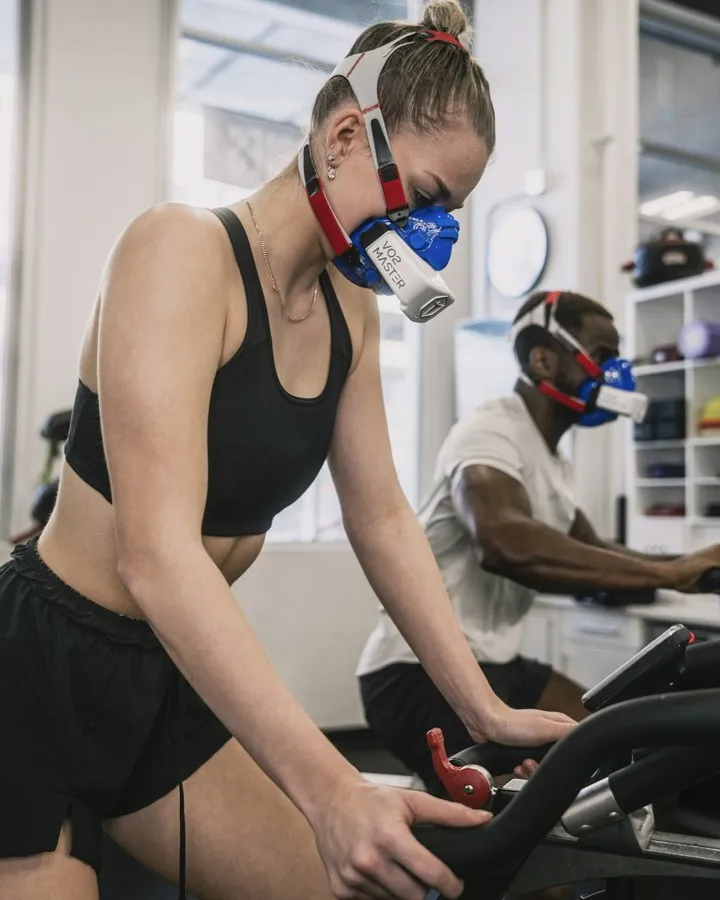
Each activity takes a certain amount of oxygen (its cost in the Compendium of Physical Activities), and you can only hold part of your VO₂ max for a while: about 90% for a dash for the bus, 55% for a 3-hour hike. That sets what a man needs. A woman’s need is set from the same age: the typical woman’s VO₂ max at the age the typical man’s falls to his need, so each activity means doing it at the pace women typically do, and the typical woman keeps it about as long as the typical man. For strength, your upper-body and lower-body tests each give a percentile for your age, and we average them. Each strength task needs a set amount of strength, which we set from the age at which the typical woman or man can no longer do it safely, without strain: from workplace lifting studies (Snook and Ciriello’s lifting tables, the NIOSH lifting equation, and Matheson’s lift-capacity norms) and grip strength by age (Dodds, 2014). Strength varies between people by about 25% either side of the middle. We assume you stay at your percentile, so your numbers fall at the rate the population’s do. Ages are estimates, give or take about 5 years, and the strength ones are rougher.